
a guest post by Sylvia Barbara Soberton
Robert Dudley is remembered mostly as Elizabeth I’s master of the horse and possible lover. The two knew each other since childhood and when Elizabeth became queen they became inseparable. Robert was a married man at the time and his involvement with the Queen – their private meetings, hunting escapades and intimacy – added to the scandal.
When Amy Dudley, Robert’s first wife, was found dead at the bottom of a staircase, rumours of foul play
abounded. Was it an accident or a murder? If Elizabeth nurtured any hopes of marrying Robert, they died together with Amy. How could she marry the man who was rumoured to have murdered his wife? Nevertheless, the relationship continued. A wealthy widower – Elizabeth rewarded him with the earldom of Leicester in 1564 – Robert was a magnet for women. In 1574 his mistress, Douglas Sheffield, gave birth to their illegitimate son but even birth of a son could not persuade Robert to marry. In a letter to an unknown woman, possibly Douglas, Robert said that remarriage would be his “utter overthrow.” The Queen would never forgive him. And so Robert still hoped that Elizabeth would marry him one day. He even threw a lavish party for her at his seat at Kenilworth Castle in 1575, eagerly promoting his matrimonial suit. However, by 1578 Robert knew that Elizabeth would never marry him. In his mid-forties and without legitimate male heirs, Robert faced the prospect of dying as the first and only Earl of Leicester of the Dudley family.
On 21 September 1578 he decided to risk Elizabeth’s wrath and secretly married the woman with whom he had been in love for years. Lettice Deveraux, Dowager Countess of Essex, was the Queen’s cousin. Daughter of Katherine Carey (and thus granddaughter of Mary Boleyn) and Francis Knollys, Lettice was a mother of
several children. In her mid-thirties she was still able to have more, a prospect that appealed to Robert. Queen Elizabeth never forgave Lettice for what she perceived as stealing Dudley away from her. She banished them from court but allowed Robert to return while Lettice lived comfortably in London. The Queen was always agitated when she heard Lettice’s name and described her as “a she wolf” and “bad woman”.
The son and heir Robert wanted so much was born on 8 June 1581. Unfortunately, the little lord Denbigh died on 19 July 1584, much to his parents’ devastation. When he learned of his son’s death, Robert left court in a huff to
“comfort my sorrowful wife.” Elizabeth sent a private messenger with condolences to Robert but never wrote a formal letter as that would have forced her to address Lettice as Countess of Leicester; even the death of her
lover’s child did not soften the Queen’s hatred of Lettice.
Elizabeth never forgave Lettice. Even Robert’s death in 1588 did not end the feud between the two women. Attempts were made to reconcile Lettice and the Queen, but those stopped after Elizabeth executed Lettice’s beloved son Robert Devereux, 2nd Earl of Essex. Lettice outlived Elizabeth, dying in 1634.
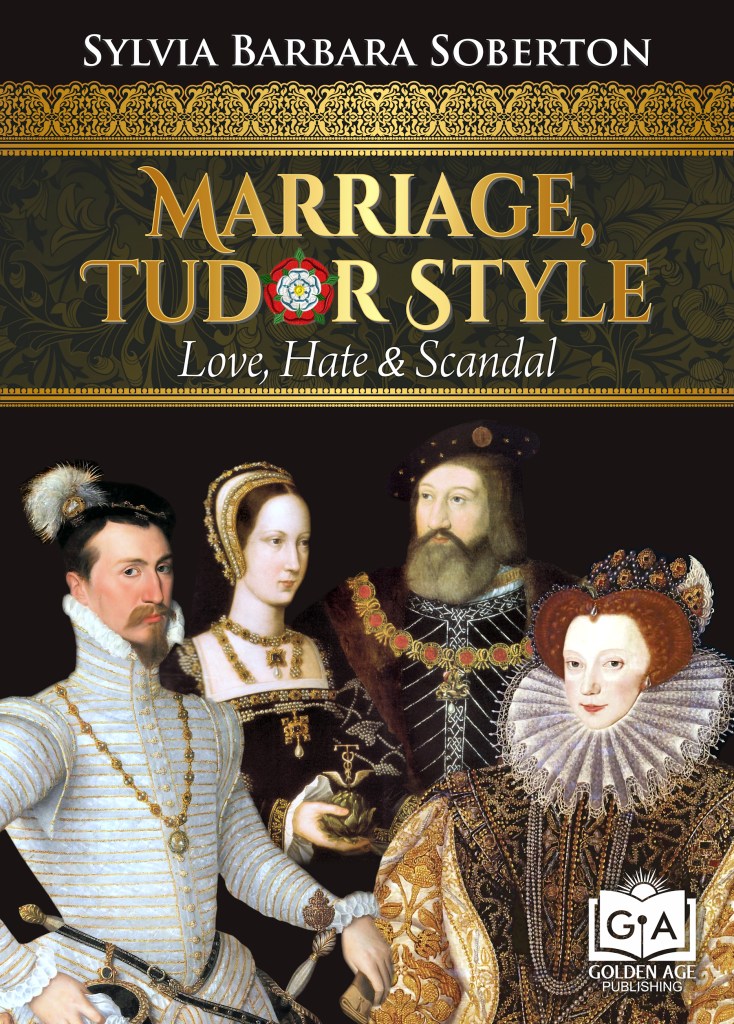
You can read more about Robert’s and Lettice’s
relationship in Sylvia’s book: Marriage, Tudor Style: Love, Hate & Scandal
You Might Also Like…
1. Elizabeth I’s Coronation: A Perspective
 Maidens and Manuscripts: Taking a fresh look at people and events from 1347 to 1625, with a focus on women and illuminated manuscripts