
by Richard Anderton, with Heather R. Darsie, J. D.
Part 1: An Accident of Birth
Jacqueline, Countess of Hainaut, Holland and Zeeland, was born on the 15 July 1401. She was the only child of William II, Duke of Bavaria-Straubing, and Margaret of Burgundy. Through her mother Jacqueline was related to the kings of France as well as Burgundy’s powerful dukes whilst her father’s forebears included the Holy Roman Emperor, Ludwig the Bavarian. Despite William’s title and ancestry, his powerbase was a patchwork of lands spread across medieval Burgundy and Jacqueline was born in the castle of Le Quesnoy, in what is now France.
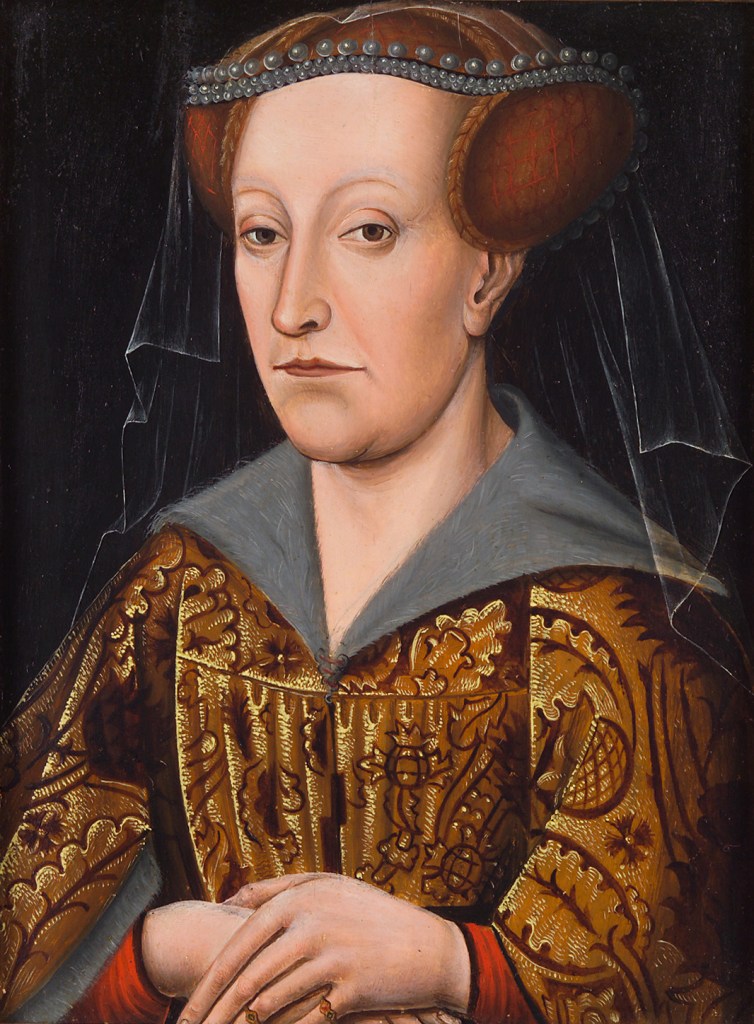
The most important of William’s lands were the Burgundian Counties of Hainaut, Holland and Zeeland to which Jacqueline should have succeeded in the event of her father’s death but there was a problem. In Hainaut a woman could inherit but in Holland and Zeeland she could not.
In order to keep his patrimony together, in the hope that Jacqueline would provide him with a grandson who could succeed to everything, William planned to marry his daughter to a powerful nobleman and his first choice was John, Duke of Touraine. At first sight this looked like a wise decision. John was his wife’s cousin and the fourth son of the King of France, meaning he could rely on French support in the event of any dispute. Unfortunately, this marriage was prohibited on the grounds of consanguinity and by the fact that the couple were still children.
Undeterred, William persuaded Pope Boniface IX to grant the necessary dispensation and he announced the couple’s betrothal on 5 May 1403, even though Jacqueline was not yet two years old and her fiancé was only five. Until the couple came of age, they lived together in Le Quesnoy and they were eventually married on 6 August 1415. Three months later, the flower of French chivalry was slaughtered on the field of Agincourt and shortly afterwards the 17 year old Duke of Touraine found himself heir to the French throne.
Two of John’s older brothers had died young and though the third, Louis, had not fought at Agincourt he had died of dysentery on 15 December 1415. John and Jacquline were now the Dauphin and Dauphine of France but this was, quite literally, a poisoned chalice. Jacqueline’s husband was assassinated by poison on 4 April 1417. Six weeks later, Jacqueline’s misery deepened when her father died after being bitten by a dog.
William’s sudden death triggered the succession crisis he had strived so hard to avoid and the chief architect of Jacqueline’s woes was her own uncle, the aptly named John the Pitiless. The late William’s brother had been elected Prince-Bishop of Liège in 1389, despite being a mere 15 years old, and his tenure was characterised by frequent revolts against his tyrannical rule. In 1408, John suppressed an uprising with such ferocity he was dubbed “the Pitiless” and he certainly had no compunction about disinheriting his niece.
On the death of Jacqueline’s father, John the Pitiless resigned his prince-bishopric and declared himself to be the rightful Duke of Bavaria-Straubing as well as Count of Hainaut, Holland and Zeeland but Jacquline’s redoubtable mother, Margaret of Burgundy, countered her brother-in-law’s claims by marrying her widowed daughter to her cousin John IV, Duke of Brabant. Incidentally, John IV’s father, Antoine de Brabant, had been one of the French prisoners killed at the battle of Agincourt on the orders of Henry V.
At the time of Jaqueline’s second betrothal, her husband was two years younger than herself but this marriage was also forbidden by their closeness of blood. Undeterred, her mother obtained yet another papal dispensation, this time from Pope Martin V, but John the Pitiless quickly persuaded His Holiness to reverse his decision.
The papal revocation was issued in January 1418 but Margaret simply ignored it and Jacqueline wed the duke of Brabant on 10 March that year. The outraged John the Pitiless immediately declared war on his niece and for good measure he married Elisabeth, Duchess of Luxembourg. The ex-prince- bishop’s bride was the widowed mother of Jaqueline’s new husband and a niece of the Holy Roman Emperor, Sigismund of Luxembourg. John the Pitiless now had a powerful ally on his side and a year later he had another when Philip the Good, Duke of Burgundy, offered his support.
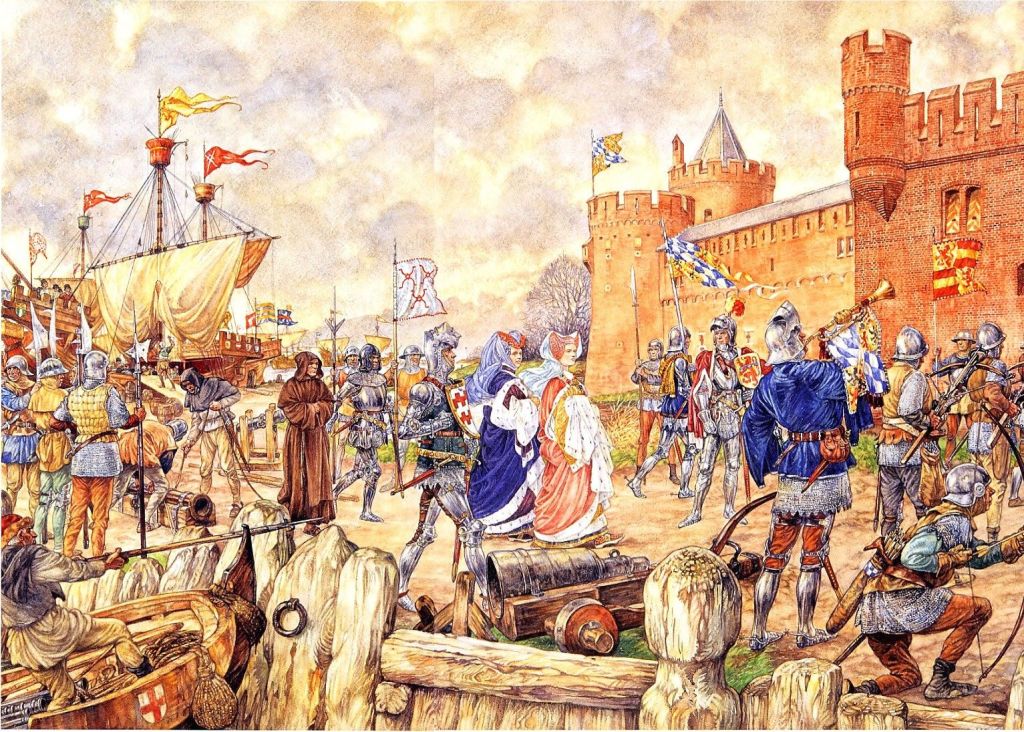
To further complicate matters, Jacqueline’s struggle for her birthright became subsumed into the long running civil strife that tore apart the County of Holland in the 14 th and 15 th Centuries. Known as the Hook and Cod Wars, this bewilderingly complex class struggle usually pitted wealthy, forward thinking cities, the Cods, against the more conservative, land-owning aristocracy, the Hooks. That said, loyalties were extremely fluid and why these factions adopted fishing soubriquets is unclear.
Whatever the reason, Jacqueline and her husband became identified with the Hooks and despite some early victories they soon found themselves on the losing side. After their army was routed at the siege of Dordrecht, John of Brabant tried to buy his way out of the war by signing over large chunks of his wife’s disputed inheritance to the hated John the Pitiless. Quite understandably, Jacqueline was outraged by this shameless betrayal so she turned to Henry V, the man who had ordered the death of her spineless husband’s father.
The dispossessed Countess of Hainaut arrived in England on 6 March 1421, in the hope that Henry would help her obtain an annulment of her marriage to the faithless Duke of Brabant. In a strange echo of Henry VIII’s “Great Matter” a century later, Jacqueline’s argument rested on the grounds that the original dispensation obtained by her mother from Pope Martin V was in error and her marriage was prohibited by the rules of consanguinity after all. She certainly had a good case because Martin had revoked his own decree of dispensation soon after its grant.
Happily for Jacqueline, England’s warrior king was entirely sympathetic to her cause. He gave the countess a sumptuous reception and made her godmother to his newborn son, the future Henry VI. Sadly, Jacqueline’s good fortune would not last…
Part 2: Once More Unto the Breach
The first part of this article introduced Jacqueline, Countess of Hainaut, who was deprived of her birthright by a cruel combination of unjust inheritance laws, toxic marriages and treacherous relatives. Driven from her homeland by the scheming of her wicked uncle, John the Pitiless, and feckless second husband, John IV, Duke of Brabant, Jaqueline fled to England to enlist the support of Henry V and he promised to help. Unfortunately, the victor of Agincourt died whilst on campaign in France.
Despite losing her most important ally, Jacqueline persuaded England’s courts to annul her marriage to the Duke of Brabant. Once she was free, at least according to English law, Jacqueline set her cap at Humphrey, Duke of Gloucester, brother of the late Henry V, and her motives are not hard to fathom. She needed English help to reclaim her inheritance and Humphrey rather liked the idea of being a ruler in his own right rather than a regent for his infant nephew.
Jacqueline’s third marriage was solemnized in the spring of 1423 but John the Pitiless and John of Brabant, who now shared a common cause, immediately protested. They insisted that Jacqueline’s second marriage, to John of Brabant, was still valid so her third must be bigamous. To resolve the matter Jacqueline appealed to both popes, Martin V in Rome and Antipope Benedict XIII in Avignon, but she did not wait for either judgement before crossing the Channel with her English husband. At the end of November 1424, the couple landed in Calais with a small army and marched to Mons, Hainaut’s capital. This show of force persuaded the city’s fathers to recognise the English duke as their sovereign but they did so reluctantly. Undaunted, Jacqueline’s husband began signing himself: “Humphrey, by the grace of God, son, brother and uncle of kings, Duke of Gloucester, Count of Hainaut, Holland, Zealand and Pembroke, Lord of Friesland and Grand Chamberlain of England”.
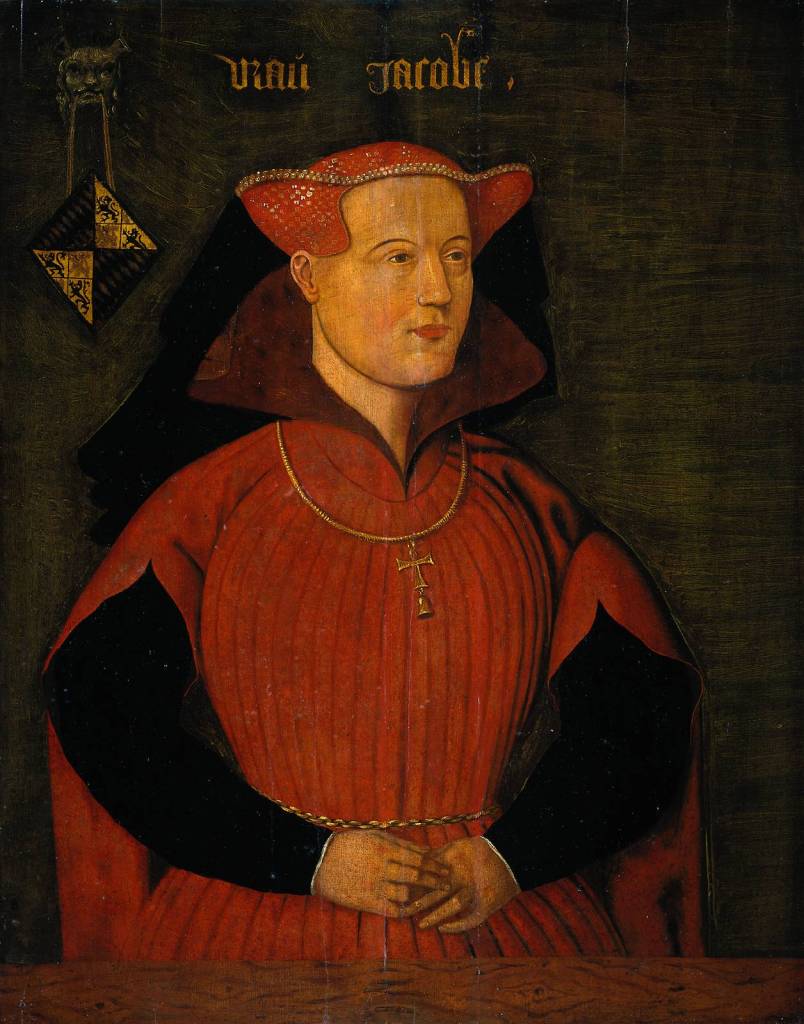
Convincing the burghers of Mons to accept Humphrey was a major success and shortly afterwards Jacqueline heard that her devious uncle, John the Pitiless, had died. Apparently, the ex-prince-bishop of Liège had been poisoned by one of his own officers, who had impregnated his master’s prayer book with a lethal toxin. Though Jacqueline must have welcomed this news, her troubles were far from over because John of Brabant now formed an alliance with Philip the Good, Duke of Burgundy. Humphrey’s interference in the Hainaut succession had angered Philip and the high-handed letters he wrote to Burgundy’s duke to defend his actions only made matters worse. Humphrey’s arrogance threatened to wreck the delicate Anglo-Burgundian alliance, which had been crucial to securing Henry V’s victories in the Hundred Years War, but Philip outmanoeuvred Jacqueline’s third husband by forcing her second to place his (ex) wife’s lands under Burgundian control.
Though the Countess of Hainault had plenty of supporters in her ancestral homelands, so did the dukes of Burgundy and Brabant. Consequently, Jacqueline’s attempt to assert her rights by force did not fare well. In late 1425, Humphrey returned to England to raise more men but he stayed behind when these troops set sail for the Low Countries. This decision proved to be fortuitous for Humphrey because on 13 January 1426 the Anglo-Hainault army was massacred at the Battle of Brouwershaven and Jacqueline was captured. The courageous countess was imprisoned in the city of Ghent but she refused to submit.
Disguising herself as a man, Jacqueline escaped to Gouda, a city still loyal to her cause, and her fortunes seemed to improve further when John of Brabant died. Unfortunately, Philip the Good had decided to seize Jacqueline’s lands for himself and Pope Martin declared that her third marriage, to Humphrey, had been unlawful after all.
At this point John, Duke of Bedford, who was Humphrey’s older brother and co-regent for the young Henry VI, decided to intervene. Bedford needed Burgundy’s support to prop up the increasingly shaky English edifice in France so he told his younger brother to stop meddling in Burgundian affairs.
In truth, Bedford was pushing at an open door because the mercurial Humphrey had grown tired of his Hainaut adventure and his notoriously roving eye had alighted on Eleanor Cobham, one of Jacqueline’s English ladies-in-waiting. Once Humphrey had been released from his marriage to Jacqueline, he married Eleanor with unseemly haste.
Humphrey’s second marriage shocked all England and in later years Eleanor would be accused of using witchcraft to seduce him. In spite of the scandal, their union prevailed and Jacqueline was left without an ally in her struggle to win back what was rightfully hers.
Having been betrayed by an uncle, a pope and two of her three husbands, Jacqueline had no choice but to make peace with Philip the Good. On 3 July 1428 she signed the Reconciliation of Delft, which allowed her to keep her titles but her lands remained under the duke of Burgundy’s control. Philip had won a near total victory but Jacqueline continued to intrigue for her restoration with a Zeelander nobleman named Frank van Borssele.
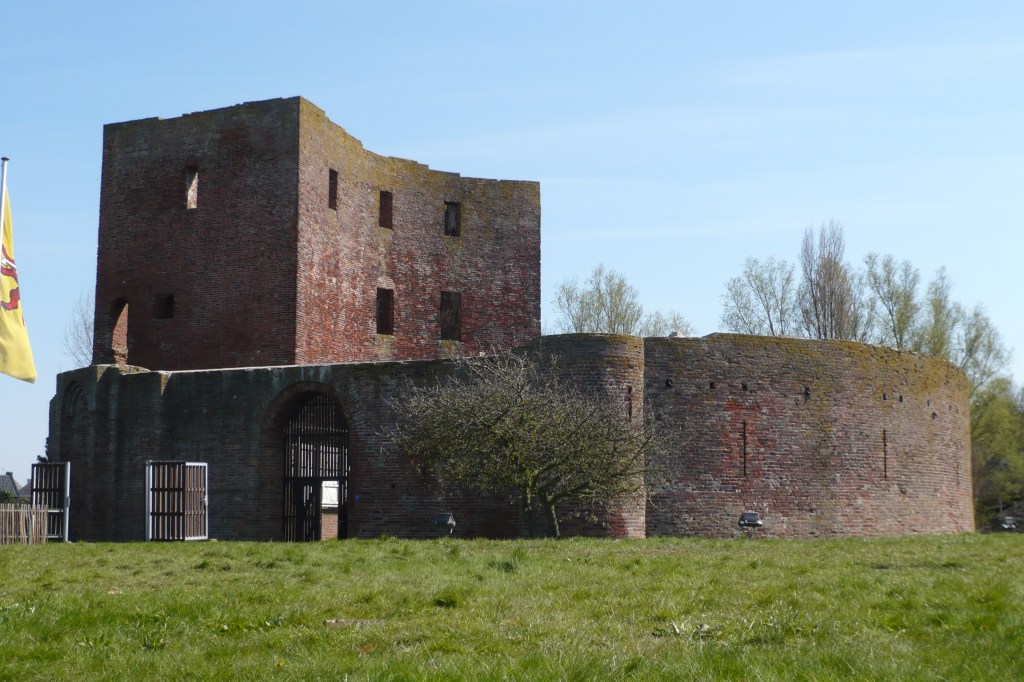
Borssele had been a supporter of John the Pitiless and after the death of Jacqueline’s uncle he had been appointed steward of her sequestered lands in Zeeland. Besides plotting against Philip, Jacqueline and Frank may have married in secret and Philip was certainly suspicious enough to have his steward arrested. To secure Frank’s freedom, Jacqueline had to formally renounce all her titles, which she did in 1433 but, despite this final humiliation the ex-Countess of Hainaut, Holland and Zeeland managed to find a small measure of happiness in her final years.
In the spring 1434 Jacqueline and Frank were officially wed and her fourth marriage appears to have been a genuine affair of the heart. If this was a fairytale that should be the end of the story but high-born, medieval ladies rarely lived “happily ever after.” After only two years of marital bliss, Jacqueline died of tuberculosis. She was only 35 and she left no children yet her story of resilience in the face of constant betrayal is a legacy that will continue to endure.
Sources
1. Putnam, Ruth, A Mediaeval Princess: Being a True Record of the Changing Fortunes Which Brought
Divers Titles to Jacqueline, Countess of Holland, Together with an Account of her Conflict with Philip,
Duke of Burgundy (G. P. Putnam & Sons, New York, 1904)
2. Tout, Thomas Frederick, Dictionary of National Biography, Volume 28, Humphrey Duke of Gloucester
(Smith, Elder & Co., London, 1885-1900)
Author Biography
Richard Anderton is the author of The Last Yorkists, a biography of Richard III’s nephews, Edmund and Richard de la Pole, who were the last princes of the House of York to actively seek the throne. His new book, The Boar and the Peacock, is a biography of Sir James Tyrell, the man accused of arranging the murders of the Princes in the Tower, whose grandfather played a minor part in Jacqueline of Hainaut’s story. The Boar and the Peacock was released on 15 November 2026 and is currently available to pre-order either directly from Amberley Publishing or from all good online and high street bookshops.
Picture Links – all licensed under Wikimedia Creative Commons
Part One
- Jacqueline as Countess of Hainaut – 1441 portrait by Lambert van Eyck
https://en.wikipedia.org/wiki/Jacqueline,_Countess_of_Hainaut#/media/File:Jan_van_Eyck_097.
jpg - Jaqueline and her mother, Margaret of Burgundy, at the siege of Gorinchem (1417) – 1958
watercolour by Johan Herman Isings
https://commons.wikimedia.org/wiki/File:Jacoba_van_Beieren.jp
Part Two
- Jacqueline, as Countess of Holland and Zeeland wearing the same Borssele pendant as her
fourth husband – anonymous 16 th Century copy of a lost original
https://en.wikipedia.org/wiki/Jacqueline,_Countess_of_Hainaut#/media/File:Jacoba_van_B
eieren_(1401-1436),_gravin_van_Holland_en_Zeeland.jpg - Slot Teylingen in South Holland, the castle where Jacqueline, Countess of Hainaut died on 8
October 1436 –
https://commons.wikimedia.org/wiki/File:Slot_Teylingen_north_side.jpg


Wonderful post, thank you! This woman would make an excellent subject of a biography. Any thought of doing one?
LikeLike