From the Bestiary: the He-Goat

by Heather R. Darsie The He-Goat, different from a satyr, is described as a, “…stubborn, lascivious animal.” The He-Goat, “…is always eager to mate,” with eyes that, “…are so full of lust that they look sideways…Its nature is so hot diamonds, against which fire and iron are powerless, dissolve in its blood.” No physical description is given of the He-Goat, and the writer of the … Continue reading From the Bestiary: the He-Goat

From the Bestiary: Eale

by Heather R. Darsie The eale is an all-black, horse-like animal bearing an elephant’s tail, long bull’s horns, and boar’s tusks. The horns are, “…adapted to every kind of movement…” and can, “…be moved as needed when it fights.” When fighting, the eale, “…puts one out in front…, so that if it loses its tip from a blow, it can bring the other one forward.” … Continue reading From the Bestiary: Eale

From the Bestiary

by Heather R. Darsie This series of posts will feature different animals found in illuminated bestiaries. From August 2017, the following source will be used for all beasts: Barber, Richard: translation and introduction. Bestiary: Being an English Version of the Bodleian Library, Oxford. M. S. Bodley 764. All original miniatures reproduced in facsimile. Woodbridge: 1999. The source shall be abbreviated as “MS Bodley 764 facsimile.” This … Continue reading From the Bestiary

Maria of Austria, Duchess of Jülich-Kleve-Berg

On 11 December 1581, Maria of Austria, Duchess of Jülich-Kleve-Berg, passed away at Hambach Castle. Maria began her life on 15 May 1531 in Prague, where she was welcomed as the third daughter and fifth of what would be fifteen children from the marriage of Ferdinand I, Holy Roman Emperor, and Anna Jagiello of Bohemia and Hungary. Ferdinand was a younger brother to Charles V, … Continue reading Maria of Austria, Duchess of Jülich-Kleve-Berg

Quixotic Musings: the Adventurous Life of Miguel de Cervantes Saavedra

  By Juan de Jauregui y Aguilar (circa 1583 – 1641) (The Bridgeman Art Library, Object 108073) Miguel de Cervantes Saavedra, author of Don Quixote, died on 22 or 23 April 1616 in Madrid. Born in about 1547 to a deaf surgeon, Cervantes spent his childhood in poverty. The profession of surgeon was not at all high-paying. Cervantes’ exact date of birth is unknown, but … Continue reading Quixotic Musings: the Adventurous Life of Miguel de Cervantes Saavedra

It is Not in the Stars to Hold Our Destiny, but in Ourselves

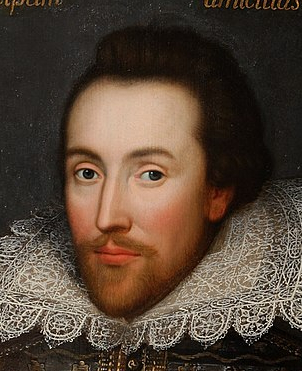
Around 23 April 1564, a great mind was born in a small English market town. Such an immortal mind was baptised 26 April 1564 in Stratford-upon-Avon in Warwickshire. With inauspicious beginnings as the third of six children born, first to survive infancy, to a leather merchant and landed heiress, William Shakespeare would go on to lead the life of an intellectual lion, whose roar can … Continue reading It is Not in the Stars to Hold Our Destiny, but in Ourselves

Remembering Hieronymus Bosch, 500 Years Later

On Wednesday 9 August 1516, a funeral mass was sung for the soul of Jeroen von Aeken. Better known by his artistic name of Hieronymus Bosch, he was 58 to 66 years old at death. Dying in the city of ’s-Hertogenbosch, located in the Brabant, Bosch may have passed on from pleurisy which was plaguing the city around that time and claimed the lives of … Continue reading Remembering Hieronymus Bosch, 500 Years Later

If by Land or by Sea

by Heather R. Darsie Anne of Cleves by Hans Holbein, 1539 Anna von Kleve, known to English speakers as Anne of Cleves, left her homeland in December 1539 to join her new husband, Henry VIII of England. The two had been married by proxy a couple months earlier, in October. After Henry successfully negotiated the marriage alliance with Anna’s younger brother Wilhelm, Duke of Cleves … Continue reading If by Land or by Sea

Amalia of Cleves, Sister of Anna of Cleves

by Heather R. Darsie Unknown Woman by Hans Holbein, c. 1539 After just over six months of marriage, on 9 July 1540, Anna von der Mark, more commonly known as Anne of Cleves, was divorced from Henry VIII of England. As part of her reward for acquiescing so easily to Henry’s request, she would forever after be known in England as the Daughter of Cleves … Continue reading Amalia of Cleves, Sister of Anna of Cleves

Amalia of Cleves, Sister of Anne of Cleves

by Heather R. Darsie Unknown Woman, previously identified as Amalia of Cleves by Hans Holbein, c. 1539 After just over six months of marriage, on 9 July 1540, Anna von Kleve, more commonly known as Anne of Cleves, was divorced from Henry VIII of England. As part of her reward for acquiescing so easily to Henry’s request, she would forever after be known in England … Continue reading Amalia of Cleves, Sister of Anne of Cleves