

By Heather R. Darsie, J. D.
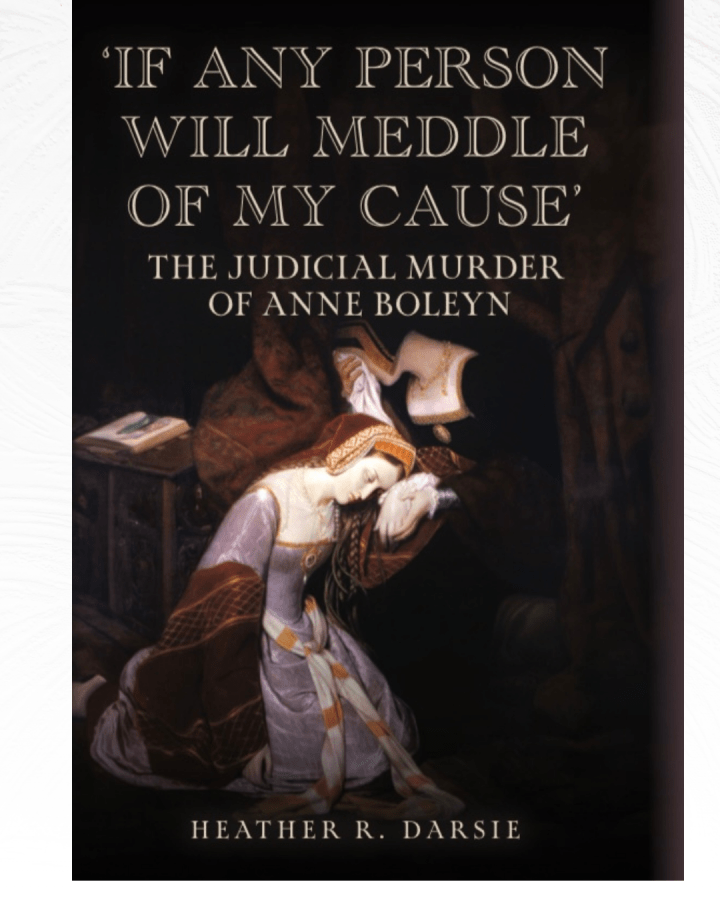
Please enjoy this post in celebration of the release of, If Any Person will Meddle of My Cause: The Judicial Murder of Anne Boleyn, with free shipping to the UK and US from Blackwell’s.
Two future Tudor queens wed on 14 November, which is one of the feast days for St. Erkenwald. The women wed their Tudor suitors 31 years apart, and both had tragic endings. Katharine of Aragon married Arthur Tudor on 14 November 1501, and it is believed that Anne Boleyn likely wed Henry VIII in secret the first time on 14 November 1532. Who was St. Erkenwald?
Earconwald or Erkenwald lived in the 7th century. He was a Saxon prince, although establishing precisely who his father was has been elusive for historians. He is believed to have studied under an Archbishop of Canterbury. Erkenwald’s traceable life begins with his founding in c. 660 – 667 of Barking Abbey in London and Chertsey Abbey in Chertsey, Surrey. Erkenwald’s sister Saint Ethelburga served as the first abbess of Barking Abbey. Shortly after, Erkenwald became Bishop of London. Erkenwald also had a hand in the early building phases of London’s Old St. Paul’s cathedral.
Erkenwald had an impact on the development of laws in the Kingdom of West Saxons, or simply Wessex. Erkenwald brought a Christian element to the development of Ines asetnessa, or King Ine’s Laws, also called Laws of Ine. Erkenwald became an official advisor to the development of King Ine’s laws, and is mentioned several times in the Laws of Ine. Two major developments to come from Erkenwald’s influence were the creation of sanctuary laws, and diminishing the practice of weregeld, or man-money, as the literal translation. The word and practice was to set a price for a man who was injured or died. The guilty person had to pay a set amount of money to the man’s family based off the extent of injury, disablement, or death in combination with the man’s social status. With the Laws of Ine and Erkenwald’s Christian influence, the practice of weregeld slowly gave way to the medieval and subsequent periods’ Christian concept of capital punishment.
Over time, Erkenwald became revered within London and the greater Kingdom of England. He died in 693 and was interred within Old St. Paul’s cathedral. His tomb became a place of pilgrimage. St. Erkenwald was seen as Lux Londonie, meaning the Light of London, and Londoniae maximum sanctus, or the most holy figure in London. For both Katharine of Aragon and Anne Boleyn, being married on such a symbolic day and being connected with the Light of London must have felt like an auspicious blessing for their marriages to Arthur Tudor and Henry VIII, respectively. For Katharine, her marriage to Arthur would end with his death a few months later, after which Katharine was thrown into a period of limbo and distress. For Anne and her religious reform ideas, being joined with the idea of the most holy figure in London could have confirmation of Anne’s mission, which would ultimately kill her.
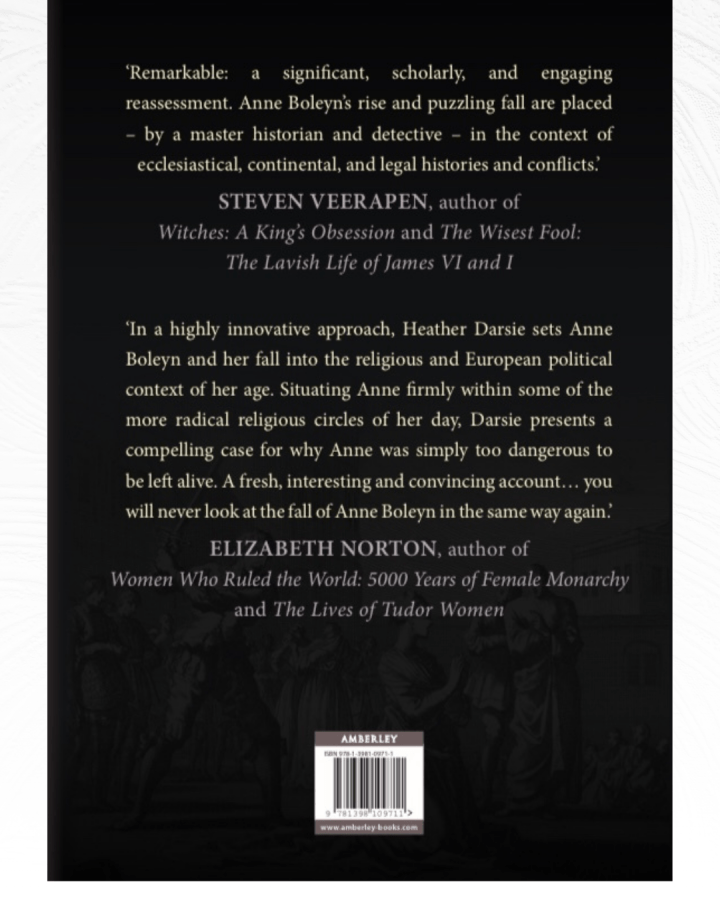
For more, pick up a copy of If Any Person Will Meddle of My Cause: The Judicial Murder of Anne Boleyn, available via hardback and Kindle in the UK, or via Kindle internationally. Hardbacks are available for international pre-order, with release on 21 April 2026.
 Maidens and Manuscripts: Taking a fresh look at people and events from 1347 to 1625, with a focus on women and illuminated manuscripts