
by Heather R. Darsie, J. D.
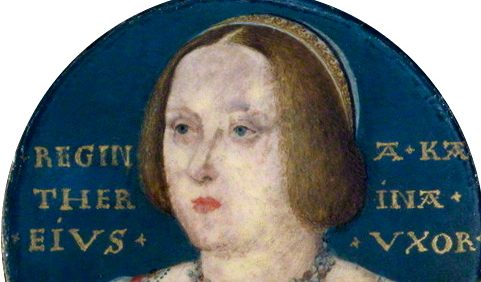
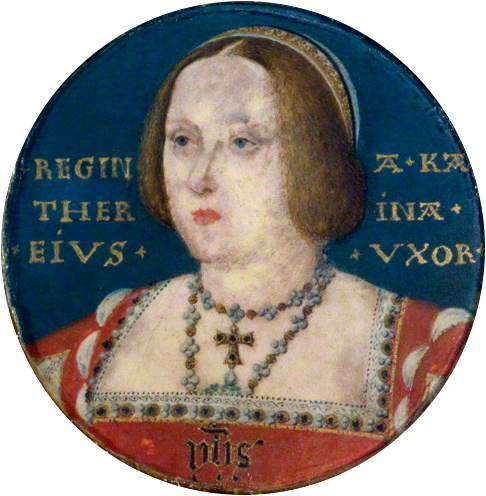
Katharine of Aragon left an indelible mark on Tudor England that remains to present time. We are still talking about her. Katharine’s life and the struggle she faced impacted her tremendously, and left a huge impression on her daughter Mary. This very evident when looking at who Mary I, England’s first queen regnant, chose as a husband and the details surrounding Mary’s wedding day. Following is an excerpt from my new biography Katharine of Aragon, Spanish Princess: ‘I am not as Simple as I may Seem’:
“Katharine of Aragon’s surviving child, known from time to time as Princess Mary or Lady Mary Tudor, had a long and trying path through life. She was a princess from her birth until Mary’s father threw away Mary and Mary’s mother Katharine of Aragon to gain further legal control over England by establishing his own church, which allowed him to marry Anne Boleyn. The marriage with Anne Boleyn did not produce the hoped-for son and ended in calamity, causing Henry VIII to find a third wife in Jane Seymour. Jane Seymour produced the future Edward VI, then died. Henry returned to the altar to wed Anna of Cleves, who would prove to be an enduring friend to Mary. Henry was forced to annul the marriage for political reasons and swiftly take a teenage bride, Katheryn Howard, to prevent anyone from taking Anna back, thereby dragging England into William of Jülich-Cleves-Berg’s war with Katharine of Aragon’s nephew and Mary’s cousin Holy Roman Emperor Charles V. The Howard match was a failure. Henry married for a sixth time to Catherine Parr in the midst of the Cleves War, if only to avoid remarrying Anna of Cleves. Throughout all of her father’s marital exploits and political entanglements, Mary drifted in and out of favor with her father and in and out of the succession.
Once her father died, Mary’s brother Edward reigned from January 1547 until his own death in July 1553. Edward, a Protestant, did his best to write Catholic Mary out of the succession, placing their Protestant cousin Jane Grey on the throne. Jane was never anointed as queen. Mary raised an army, and in a move that would have made her mother Katharine of Aragon and grandmother Isabella of Castile and León proud, engaged in a mild act of conquest to seize the throne that Mary believed was rightfully hers. There are plenty of reasons for and against Mary’s point of view, but it is undisputed that she raised an army and entered London to defeat Jane. Mary was successful, and became England’s first anointed queen regnant. Mary carried on the Spanish tradition of her mother’s family by being a female ruler in her own right. Next, Mary, who was thirty-seven when she became queen, had to find herself a husband and produce an heir. She knew her husband had to be Spanish.
Mary wanted to fulfill the dynastic ambition of her maternal grandparents by marrying a Trastámara cousin, thereby further uniting Spanish ties with England. Her preference was for her first cousin Holy Roman Emperor Charles V, but he was already in his fifties and preferred remaining a widower. Charles’s son Philip, who was eleven years younger than Mary, seemed a better candidate. Arrangements were made, despite the grumbling of Mary’s English subjects. Mary turned thirty-eight in February 1554.

Mary I married, at long last, on 25 July 1554. She married her cousin Philip of Spain, who was made the King of Naples shortly before the wedding. Philip left Spain for England a couple of weeks before the couple’s planned wedding date, arriving only two days before the couple were set to wed in Winchester Cathedral. This begs the question: what was the rush?
Whilst Mary was older than the typical first-time bride in either the 16th or the 21st centuries, waiting a few more days so Philip could rest would not make a difference. There was nothing spurning the couple to marry immediately after Philip’s arrive in England. Or was there? The date of 25 July proves to be a date rife with saintly symbolism for Mary, something of which her Catholic contemporaries could have been aware. The date of 25 July is the feast day for St. James, or Santiago, the patron saint of Spain.”
If you enjoyed this excerpt and insight into Katharine of Aragon, then you might enjoy my new biography about her an her Spanish heritage, Katharine of Aragon, Spanish Princess: ‘I am not as Simple as I may Seem’

 Maidens and Manuscripts: Taking a fresh look at people and events from 1347 to 1625, with a focus on women and illuminated manuscripts